Pages

Monday, December 13, 2021

The Ten Best Albums of 2021

I did an okay job keeping up with new releases this year.  Okay enough that I didn't feel compelled to do any end of year cramming or searching. I simply looked back at the list I'd been maintaining all year long and picked my overall favorites, which gave me a list of 18 choices. From there I narrowed it down to these 10.

Highway Butterfly: The Songs of Neal Casal

I knew of Neal Casal primarily through his instrumental band Circles Around the Sun. However, when he passed away in 2019 at the age of 50 I had no idea that he was also an expert lyricist and songwriter. Thankfully, Neal's friends and admirers got together to record over 40 of his songs as a tribute. I wouldn't normally include a various artists compilation like this on an end of the year list, but it's too good to leave off.
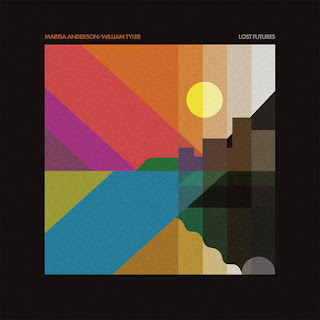

Lost Futures by Marisa Anderson and William Tyler

Both primitive and sophisticated is this meeting between two guitar greats: Marisa Anderson and William Tyler. I listened to it while driving along the Oregon Coast and it was the perfect soundtrack to that road trip and landscape.


Heaven and Holy by Painted Shrines

This is perhaps the most pop-oriented selection of the ten on this list. Jangle-pop that is. The guy from Reds Pinks and Purples teamed up with the guy from Woods to create this little gem of an album. Deceptively psychedelic.


New Love by Charnett Moffett

Charnett Moffett is not a name I had heard of before and bassist-led jazz releases are not usually something I am seeking out, yet I knew this was a best of year candidate from the moment I clicked play. Moffett has an understanding of Harmolodics, as taught by Ornette Coleman. Few people can even explain what Harmolodics is, much less utilize it in an effective way, but the way Moffett conducts the instruments and positions the role of the bass within this ensemble may provide some clues.


First Flight REDUX by Dave Harrington

I don't know what this is! I just like the sound of it. Especially the drumming. It quickly became my go-to exercise music for the year.


Searching for the Disappeared Hour by Sylvie Courvoisier and Mary Halvorson

Despite being a long-time fan of guitarist Mary Halvorson, this is the first time I've gotten to hear her play with pianist Sylvie Courvoisier, or any piano player. The piano adds a richness which I find soothing. While still being very abstract and difficult to comprehend, it may be ever so slightly more conventional than what we are used to.


Sunshine Radio by Tommy Guerrero

Tommy Guerrero is someone I admire: a DIYer who can be counted on to put out catchy, melodic, instrumental albums time and time again. Don't mistake this pro skater for being an amateur musician. This is pretty much the sound. The epicenter. Exactly what I am looking for in music. 


Children In Space by Guess What

I detect some major Sun Ra vibes from this album. Big, spacey tones for a keys and drums duo.


Confabulations by Duck Baker

Years ago I saw Duck Baker play a solo show in Richmond, VA but I don't recall him being this out. We're talking Derek Bailey level out. Could this be easy listening in disguise? Something keeps me coming back to it.


Yol by Altin Gün

I was watching a Phish webcast this summer and during the setbreak you could just make out the house music that Phish's sound person was playing at the venue. It sounded really good to me at the time but I had no idea what it was. After a while I thought to try the Shazam app and it was able to tell me it was a song by Altin Gün. I checked again a few minutes later and it was another song from the same Altin Gün album called Yol. This would be good music to put on the jukebox in the Star Wars Cantina.


***

Friday, August 20, 2021

A Phish Inspired Cardio Workout

If you've ever seen Phish perform You Enjoy Myself then you've likely noticed that there's a section where guitarist Trey Anastasio and bassist Mike Gordon do a choreographed bounce routine on little trampolines. They did this as recently as last Sunday, August 15, 2021 in front of a crowd of 30,000+ (COVID...what COVID?) on the beach in Atlantic City. Long-time fans may recall that Phish would also jump on the mini trampolines during Mike's Song.

Anyway, these little trampolines are called rebounders and they are great exercise! You definitely break a sweat and get your heart rate up. I don't know what brand of rebounders Phish uses on stage, but I've tried both JumpSport and bellicon and can recommend both.

My bellicon rebounder

I started last year with a 39" JumpSport rebounder and these are awesome trampolines. There's even a rebounder-focused gym in NYC called The Ness that uses JumpSport rebounders. Eventually I got a 44" fully-customized bellicon and I'm glad that I did! It has folding legs so storage is a breeze, and the jumping experience is unparalleled. Rebounding is now a regular part of my home gym workout routine. If you're worried that you'll get going too fast and accidentally jump off I haven't found that to be the case. I don't think you need a handle to hold onto.

My other favorite home gym cardio choice is a slide board, which you may or may not have heard of. Phish briefly used these as stage props around 1993. Trey and Mike would slide on them while performing the songs It's Ice or Glide. Both songs were new and pretty common back then so for a short while Phish did this quite often. I don't know why they stopped using the slide boards. 

To slide on a slide board you wear special booties over your sneakers. This helps make the surface extra slick, and basically you just slide back and forth. There's a lot more advanced stuff you can do as you gain confidence. You work out different lower body muscles than a trampoline but the slide board can be just as intense. That's why I love toggling back and forth between the two. If you're worried that you'll slip and fall, don't be. Just be a little careful as you step on or off the board. Once you're moving, balance is no problem.

If you're going to invest in a slide board you probably want one that has a solid sliding surface as opposed to the flimsy cheapo ones that a lot of places have for sale. The two best slide board brands by far are Brrrn and Ultraslide, and good news I believe these are made by or at least designed by the same team of people. The solid, high-quality material makes them very durable and a pleasure to slide on.


Brrrn started off a few years ago as a cold temperature slide board gym in NYC and now sells their Brrrn Boards direct to the consumer. You can buy Brrrn Boards on Amazon Prime (5-star rating!) or from Brrrn website. Whereas, Ultraslide is the grandaddy of slide boards - sustainably made in the USA for over 35 years. Ultraslide seems geared towards selling to NBA and NHL teams or college and youth athletic programs, but Ultraslide will also make a slide board for you! Ultraslide partnered with Brrrn to help make their slide boards, so either way you're getting the best you can get. I started with a 5 foot Brrrn Board (I'm short and my house is small) but I'm probably going to move up to a 6 foot board soon to intensify the challenge. Storage is easier than I thought it would be.

I'm just glad Phish never used a NordicTrack, Peloton or treadmill on stage! Seriously. Rebounders and slide boards are like acoustic instruments. There's no buttons to push or cords to plug in. It's all on you!

***

Adding a Bass-Line to a Melody

I've got some monophonic melodies that I like to play. Monophonic meaning that these tunes are just single melody lines, without accompaniment. I've either written or stolen these. Usually a little bit of both. Now I'd like to make them "polyphonic" by adding a counterpoint harmony line, like a bass-line. 

I guess these tunes are what some would call "cantus firmus", meaning: an existing melody used as the basis for a polyphonic composition. I certainly wasn't thinking of harmony or counterpoint when I originally came up with them. Adding a bass-line would be like adding a second tune pitched below the original to create two concurrent yet perceptually distinct lines (integrated yet segregated).

I wouldn't be playing these all at once on the same instrument the way a pianist or some guitarists might do. I'd overdub one part with the next or alternate back and forth. It's actually more of a composition exercise or study, more than anything else. Either way, I don't currently know how to come up with something like this that sounds good with the melody.

From what I understand, Renaissance period composers did not think about harmony in terms of chords. The melodic lines they created using counterpoint were focused on how the melodies interacted. I like that approach because I have always been blissfully unaware of what chords a pianist might choose if playing along with these melodies.


I'm aware that there are a few suggestions or best practices: 3rds and 6ths intervals sound good (produce clear harmonies); avoid parallel fifths (two fifths in a row), octaves are sometimes OK, 2nds and 7ths are dissonant. Use contrary motion - so if one line moves up, the other moves down (creates a sense of melodic independence). If you do move in similar motion try varying up the intervals. More actual hands-on research needs to be done to see if my ears agree with these guideposts.

What I'm thinking of doing could be something as "simple" as what the band Khruangbin does. Their guitarist Mark Speer plays the lead melody and bassist Laura Lee plays a bass-line that supports it, while drummer DJ Johnson provides the beat. Seems pretty straightforward.

Phil Lesh, the bassist for The Grateful Dead, took a unique approach as if he invented the instrument and nobody else played it before him. In Phil's case it was kind of like "Lead Bass", responding to and having a conversation with the lead treble sound of Jerry Garcia's melodic guitar lines. Phil could play it differently every time, partly because he was a gifted improviser and partly because he probably couldn't remember how he played it last time.

Moondog employed a lot of strict counterpoint in his compositions. Listening to his Moondog's music might show the way. Guitarist Jimmy Wyble was an expert at playing two simultaneous melodies on guitar. Maybe I could analyze his arrangements. Stevie Wonder played keyboard bass on some of his recordings.

There's also brass/horn harmony parts to learn from, how an arranger might write for a horn section where a lower pitched horn has one part while a higher pitched instrument like a trumpet plays something else. Studying how these interact might help. 

Hopefully it's easier than I'm making it seem. There's a book called Study of Counterpoint by Johann Joseph Fux that looks pretty cool. It was written in 1725.


Sunday, August 8, 2021

What Comes First - Cardio or Strength Training?

My at home gym is now pretty much complete. I have lots of choices when it comes to free weights and strength training equipment: Ybells, steel maces, kettlebells, medicine/slam balls, heavy wooden mudgar/karlakattai clubs, Equalizer bars, chin-up doorframe grips, resistance bands, and more. Even a bowling ball! 

For cardio my primary tools are a rebounder trampoline and a slide board. I also have a jump rope and an aerobic stepper, and I take regular walks of 2 to 4 miles in length. These walks are dog walks averaging about 25 minutes per mile, so I don't know how "cardio" they are but they are something.

Anyway, I like to do slide board before strength training. On the days I do slide board, I do it first thing in the morning, after a few minutes of stretching out and loosening up. I start out with an upright slide at a moderate pace and then gradually increase the intensity/speed in more of a hinged position. After 20 minutes on the slide board I do find that my energy when I switch to strength training is slightly more depleted than if I hadn't done the cardio beforehand. But that's no biggie.

Conversely, on other days I like to bounce on my rebounder mini-trampoline after doing strength training. The main reason for this is because after 20+ minutes of weights my body is very loose and limber and following that accomplishment with some trampoline fun is a good way to end a workout session. Also, early on when I first started rebounding the jumping would sometimes lead to a slight pain at the base of my neck, almost like a mild headache. This hasn't happened recently and does not occur when I do the trampoline after having already done some type of strength training workout.

You won't really find an answer to the question posed in the post title and that's because I don't know the answer. Each method has its pros and cons. By alternating cardio + weights one day followed by weights + cardio the next day I feel like I have the bases covered.


***

Going Keto vs Counting Calories

If you are exercising regularly and being mindful of what you eat, either approach will work. What I did initially was try to eat a low-carb, keto style diet. That, along with exercise, allowed me to lose almost 40 lbs and I never once thought about how many calories I was eating. 

I think keto may be best if you have a lot of weight you are trying to lose fast. Your body will eventually tell you whether or not keto is sustainable for you.

I felt great during keto. I reached a weight plateau about 40 pounds lighter than I was before and I stayed there for over a year. One month ago I started to think about calories, not carbs. I began to introduce things like fruit, oatmeal and sweet potatoes to my diet - things that would have been taboo on keto - with a daily calorie intake goal of about 1,600 calories. The result? I quickly lost an additional 6 or 7 pounds and seem to have reached a new, lower plateau. 

Now I am aware of low-carb and low-calorie and try to incorporate both into my choices. It's healthier and more balanced that way. Another thing I've done recently is amp up my cardio exercise by getting both a new rebounder trampoline and a slide board. Along with the 20 minutes a day of strength training I do, I now try and add 20 minutes of cardio.

Exercise and healthy eating go hand in hand. When you are exercising regularly you are less likely to want to make bad food choices, or when you do you do so deliberately knowing that your body has the metabolism to withstand the occasional indulgence. And when you are regularly making good food choices, it can lead to a better sense of well being which can give your exercise a boost or the motivation you need to stay active.


Saturday, June 5, 2021

Best Albums of 2021 So Far (Tommy Guerrero, Kiwi Jr., Phish's Page McConnell, and more)


I've been trying to keep up with new releases as they come out in 2021. Here are some favorites at about the half way point of the year.

"Instrumental" music is a broad term, but the output of skater/musician Tommy Guerrero is a pretty good example of what I mean by instrumental. So with a new album out in 2021 called Sunshine Radio it's only natural that Tommy Guerrero is leading the way. Sunshine Radio is as good as 2011's Lifeboats and Follies, which is the crème de la crème.


Giving Tommy Guerrero some company is Panorama by composer and producer Maston. Panorama is designed to sound like the library music of the 1970's. Kind of like an upgraded muzak. Maston also has more on the way this year. Other 2021 albums in a similar "instrumental" vein include Timothy James - Team, Stimulator Jones - La Mano, and Richard Houghten - 3 Seeds.

When it comes to funk/soul jazz, nobody does it better right now than Delvon Lamarr Organ Trio. So a new album by the DLO3 I Told You So is going to make the cut. Following up in that funk style are The City Champs - Luna '68 and and KB's Mixtape No. 3 by Melbourne, Australia's Karate Boogaloo.

Another branch of instrumental is the realm of new acoustic and/or primitive guitar. Breaking through that mélange is Yasmin Williams. With Urban Driftwood, this innovative and unconventional young guitarist from northern Virginia has crafted a work that should hold up over time.

As much as I like instrumental music, what I've really been going after this year is what you might call indie pop. Recent discoveries of bands like The Woolen Men, Dehd, and The Reds Pinks and Purples have put me on a search for bands with a jangle pop, paisley underground, shadow music, post-punk, and/or garage rock influences. There are at least two that I am really excited about so far this year. Firstly there's Painted Shrines, whose album Heaven and Holy has been on repeat for at least the last month and I never get tired of its mix of super catchy songs and sun-dappled instrumentals. It's like the best of both worlds.

Coming even closer to being almost the exact sound I am looking for is Toronto's Kiwi Jr. with their new album Cooler Returns. I guess in the olden days they would have called this college rock. Listening to Kiwi Jr. means constantly being on the edge of being reminded of the band they sound like without ever actually having a specific name come to mind. It's smart, quick and to the point. I don't think there's a bad song on Cooler Returns. Is it too cool for its own good and will it wear out its welcome by the end of the year? That remains to be seen.

Some rock albums that I am still undecided on include The Power of Rocks by Buffet Lunch, Rata Negra's Una Vida Vulgar, Centre by Mt. Mountain, and Uncommon Weather by The Reds Pinks and Purples (after having loved 2019's Anxiety Art). I am eagerly awaiting the chance to hear the debut LP The Ballad of Doug by The Telephone Numbers when it comes out later this month.

It's time to let things slow down a bit for some music with a more languid BPM. I don't always have the attention span for "slow" music but I was all ears when I heard that Phish's Page McConnell was coming out with an atmospheric, synth-based, almost ambient electronic album. The result - Maybe We're the Visitors - is easily the best non-Phish album by a member of that esteemed band. There's an energy burbling just below sea level across these nine tracks. This is one that would really benefit from an audiophile's speaker system. 


Once my ears were primed and ready to receive slower music, I found several other new releases that do the trick. These include Promises by Floating Points / Pharoah Sanders / The London Symphony Orchestra, Mar Interior by Mecánica Clásica, and Music for Living Spaces by Green-House. Each of these are four stars out of four.

Those are all the albums I wanted to talk about in this post. What's missing, and who knows why, is music that you might put into jazz or avant-garde brackets. I'm not quite as receptive this year. A quick 3-minute jangly pop song by a band that has studied The Byrds or R.E.M. is going to resonate more right now than someone taking cues from Ornette Coleman or Derek Bailey. At the moment that's the case. Nothing is ever constant though.

***

Monday, May 31, 2021

Spring Update - Guitar (All 4ths), Mocktails, Exercise, Music


Lately I've been playing more guitar than tenor banjo. I tune my guitar in all 4ths EADGCF from low to high so it would be better to say that lately I've been playing stringed instruments in an all 4ths tuning rather than an all 5ths tuning like GDAE or CGDA. I think of melodies as major scale numbers in this 4ths tuning and use one finger per fret. On a six-string instrument that could be like this:

6th string: note 5 of major scale (middle finger) and note 6 (pinkie)
5th string: note 7 of major scale (index finger), note 1 (middle finger) and note 2 (pinkie)
4th string: note 3 of major scale (index finger), note 4 (middle finger) and note 5 (pinkie)
3rd string: note 6 of major scale (index finger), note 7 (ring finger) and note 1 (pinkie)
2nd string: note 2 of major scale (index finger), note 3 (ring finger) and note 4 (pinkie)
1st string: note 5 of major scale (index finger) and note 6 (ring finger)

That's a full two octaves plus one note that you can play using fretted notes without having to change positions. I've selected up to about 100 tunes in my "repertoire" for learning and playing in this tuning. Occasionally coming up with a new one.


I've pretty much cut all alcohol since February. That's a solid three months. I've turned to herbal teas (naturally caffeine free) as an alternative. To spice the tea up and make a simple mocktail, I like to add a sugar free Skinny Mixes syrup flavor such as Hibiscus Passion Fruit or Mango, or make it even fancier by adding a flavored bitters or extract to the mix. Another great alcohol-free drink is to mix about one-third "shrub" (flavored vinegar) with two-thirds sparkling water like Perrier. Tastes almost like a sour beer! Another easy to make beverage is simply adding a FlavDrop to unsweetened coconut milk or cold brew, or mix all three!

I've been making my own shrubs: strawberry-cilantro, pineapple-basil, and mango-mint have been some great combos so far. I just put the fruit + herb in a jar, add some Lakanto monk fruit sweetener, and cover it with apple cider vinegar, filling almost to the top. Let it sit in the fridge for a week but give it a good shake daily. This isn't the proper way to make a shrub but it works for me. 


We had wood floors installed and converted the spare bedroom into a home gym which makes for a nice workout space. Some recent additions to my home equipment are YBells and Lebert Equalizer Bars. The YBells seem to have kicked everything up a notch and have pretty much replaced kettlebells, dumbbells and parallettes as part of daily use. And the Lebert Equalizer Bars are an improvement upon the BaseBar that I bought last year. Steel mace, shena board, steel clubs, Core Coasters, and Jayflex CrossGrips continue to be important tools in the home gym. A slide board is on the way!


I've been doing a pretty good job of keeping up with new music releases as well as always trying to uncover old music and/or new territories I might have missed. As always this has been fairly wide ranging, but here lately I've been feeling my taste lean toward rock more than usual. In particular, I've been looking around for new indie rock bands with sort of like throwback sounds where terms like surf rock, garage rock, jangle pop, or post-punk might be used in the description. Discoveries include The Woolen Men, Dehd, Painted Shrines, The Reds Pinks and Purples, Kiwi Jr., Silverbacks, Sleeper and Snake, Rata Negra, Mt. Mountain, and Buffet Lunch.


As far as books go, I'm still toggling between horror ala Valancourt Books and detective fiction ala Hard Case Crime - one or two books a week. I'm getting to the end of reading all of Ross Macdonald's Lew Archer books as well as all of Walter Moseley's Easy Rawlins books. Some viable replacements for those include the Cool and Lam series by Erle Stanley Gardner and Parker series by Richard Stark. Lisa Tuttle's The Dead Hours of Night stands out as the best recent release in the Valancourt catalog.