Pages

Showing posts with label Books. Show all posts

Monday, December 11, 2023

Best Books Read in 2023

I had a goal of reading 50 books this year, and I hit that goal by October. Now that it's December, I thought I'd mention some of my favorites from those 50+.

Four short story collections stood out for me this year. Those were:
In A Lonely Place by Karl Edward Wagner
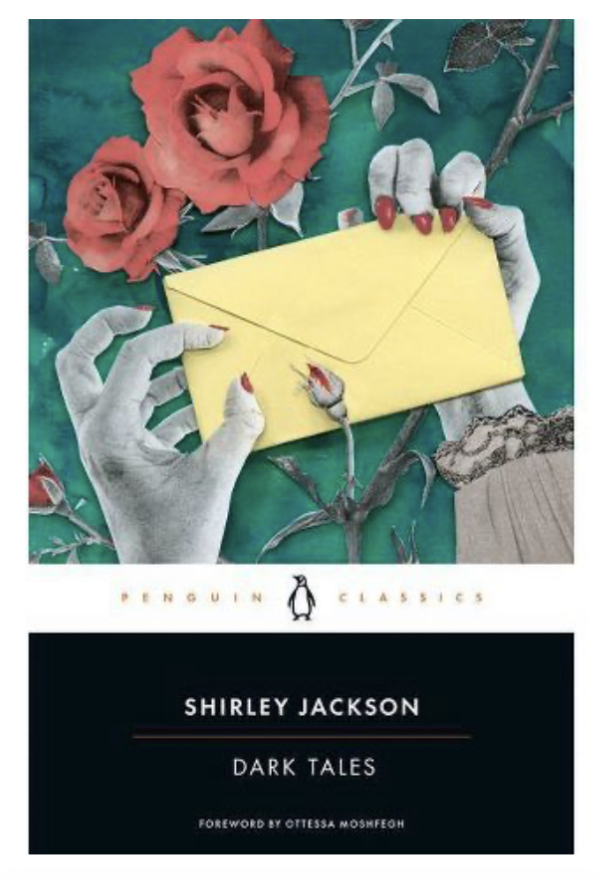
Dark Tales by Shirley Jackson
Sooner or Later Everything Falls Into the Sea by Sarah Pinsker
Riding the Nightmare by Lisa Tuttle

In the general fiction/novel category, I had three favorites:
The Wall by Marlen Haushofer
Leonard and Hungry Paul by Rónán Hession
The Woman in the Purple Skirt by Natsuko Imamura

In the mystery/thriller genre, I also had three favorites:
The Pigeon by David Gordon
How Can I Help You by Laura Sims
Resurrection Walk by Michael Connelly

Four non-fiction books were among my favorites:
Stranger in the Woods - Michael Finkel
The Art Thief by Michael Finkel
Original Wisdom: Stories of an Ancient Way of Knowing - Robert Wolff
Don’t Sleep, There Are Snakes: Life and Language in the Amazonian Jungle - Daniel L. Everett

Poetry/experimental
Kick the Latch by Kathryn Scanlan

Wednesday, December 6, 2023

Books Read November 2023

Resurrection Walk by Michael Connelly (11/13)

A Haunting on the Hill by Elizabeth Hand (11/27)


Note: I only finished two books in November, my lowest monthly tally of 2023. I did start and abandon two other books, so it was almost four. I read most of Out There Screaming: An Anthology of New Black Horror, Edited by Jordan Peele but I skipped too many stories for it to fully count. And I also got about two-thirds of the way through the new John Scalzi book Starter Villain but it was so terrible that I had to just stop. I've met my quota for the year anyway so I devoted what would have been some reading time to banjo playing time instead!

Tuesday, May 2, 2023

Books Read April 2023


No Surrender: My Thirty-Year War - Hiroo Onoda (4/1)
Shocking and meticulous first person account by a WWII Japanese soldier who went into the jungle on a small island in the Philippines in 1944 and - convinced that the war was still going on - didn’t emerge until 1974!

Original Wisdom: Stories of an Ancient Way of Knowing - Robert Wolff (4/4)

Very well written. Probably my favorite book of April. Just a little “new agey”. Would like to find more books like this.


Don’t Sleep, There Are Snakes: Life and Language in the Amazonian Jungle - Daniel L. Everett (4/11)

I liked the majority of this book, especially the descriptions of Piraha culture and what it was like to live with them. It got a little harder to follow during the linguistic discussions which were a little academic, but necessary, I suppose.


Dark Tales - Shirley Jackson (4/15)

I loved every story in this book! Although I wasn't always sure that I always "got" them. My other favorite book from April.


The Lathe of Heaven - Ursula K. Le Guin (4/23)

The first novel I've read by Ursula K. Le Guin. I wanted to like it more. Reminiscent of Philip K. Dick, but it felt very dated.


Wednesday, March 1, 2023

Books Read February 2023


The Stars Did Wander Darkling - Colin Meloy (February 2)

I enjoyed it well enough but never got fully engrossed in it. The story doesn't always make sense. I don't see how this would be for good kids ages 8 to 12.

Eight Million Ways to Die (Graphic Novel) - John K. Snyder III (February 3)
I haven’t read many graphic novels in my life but I liked this one, due in part to the great source material, but also the interpretation. It took a lot less time to finish than a normal book does. 

Malice House - Megan Shepherd (February 10)
One-fourth of the way through: very good. 50% of the way through: still pretty good. 75% of the way through: starting to slip. 100% of the way through: OK but I wouldn’t want to read a sequel.

The Bloody Chamber - Angela Carter (February 14)
This book is a classic for a reason. Every story is good. I read it like a normal book with a normal amount of time spent per page, but more time could have been spent pouring over the words. That would have only made it better.

Alien - Alan Dean Foster (February 23)
I read this for the lark of it being a novelization of the iconic movie, but it was more of a slog than a charm. It took me several days to finish because I just wasn't motivated to spend a whole lot of time with it, but I didn't want to give up altogether.

The Wall - Marlen Haushofer (February 28)
I'm glad I got this one in during the month of February. Unlike most books, I felt very "present" while reading The Wall and enjoyed almost every minute of it, every page of it, so I was never in a rush. At approximately 230 pages, that was about the max that this story could have been stretched out for. One of the things that happens at the end of the book is emotionally difficult so that was the only part I questioned or didn't like. Otherwise, a great book to have consumed and one that will probably steer me in a new direction.


Tuesday, August 11, 2020

Finished Harry Bosch Book Series - Now What?

Last month I finished reading all of the currently published Harry Bosch novels by Michael Connelly. It was a great stretch of 22 consecutive books including the two latest ones where Bosch co-headlines with new character Renée Ballard. Once I was about 5 or 6 books in I knew that Bosch books were pretty much all I was going to be reading until I had finished them. Now that it's done I'm wondering what's next?

I tried a couple obvious choices before landing on something I could really enjoy. Naturally I first gravitated to Robert Crais, whose Elvis Cole / Joe Pike series is one of the most commonly recommended for Bosch readers. It's also set in Los Angels and there are 18 or so books in the series, but I found Crais' writing style to be too glib or flippant for my taste. I just can't see myself digging into this series in a satisfying manner.

Next I tried a couple Harry Hole books by Norwegian writer Jo Nesbø. (Note: For the pronunciation of Hole, think of the Hawaiian word "hula"). This series wasn't quite to my liking either. Too many filler tangents and awkwardly forced scenes presumably there to serve the plot. I found myself asking why do I care? This has kind of put me off of the whole Nordic Noir thing, although there are surely some other Scandinavian mystery authors that I should check out.

Fortunately, I then happened upon the Aaron Gunner series by Gar Anthony Haywood
. I'm on the third book of the seven and will definitely go through the remainder over the coming weeks. This series is not very well known so you don't see it recommended a whole lot as something to fill that Michael Connelly (Bosch) jones. Comparisons to Ross Macdonald's Lew Archer series are more common. 

Haywood's character Aaron Gunner is African-American private detective and the series takes place primarily in the black neighborhoods of South-Central Los Angeles, beginning in the late 1980's and continuing before and after the 1992 LA riots. After an almost twenty year drought, book number 7 in this series Good Man Gone Bad was published in 2019. Hopefully there will be more books in this series.

Speaking of Ross Macdonald and his Lew Archer series, it might be time to check out some classic crime writers such as Ross Macdonald or Ed McBain and possibly Elmore Leonard. I have books picked out by each of these authors, all from the 1970's as a matter of fact. More on that later.


Wednesday, June 10, 2020

Justin Stone's T'ai Chi Chih and Bruce Johnson's Chinese Wand Exercise


When I was taking an interest in old-time Appalachian music, one thing that became apparent was the attention paid to lineage and pedigree. It wasn't enough to just learn a tune from your fellow jammers, or from a recording by 2nd generation or contemporary musicians like Bruce Molsky or Riley Baugus, no you had to seek out source recordings of who they learned it from. And, if possible, who that person learned it from, unless that was before recordings were made. There also wasn't much emphasis on writing your own tunes in the style.

Now that I'm starting to study traditional exercises like tai chi, I see immediate parallels. In martial arts especially, a form doesn't carry as much weight if it isn't backed by a centuries old, authentic and unbroken heritage. Teachers take pride in being able to trace their style back generation by generation to the earliest known sources.

Which brings me to two interesting takes on this that I've recently become aware of: T'ai Chi Chih (Justin Stone) and Chinese Wand Exercise (Bruce Johnson). Both books debuted in the mid-1970's. Both authors were white (non-Asian) Americans. In the case of Justin Stone, he considered himself the originator of a movement practice called T'ai Chi Chih. He took credit for its creation, although it seems as though Mr. Stone borrowed heavily from pre-established movements, like those associated with qigong the tai chi ruler.

Bruce Johnson, on the other hand, adhered to the lineage tradition, stating that he learned his Chinese Wand Exercises in the 1940's from a 93 year old grand master named Dr. Ch'eng. My guess is that Dr. Ch'eng is mostly fictional, similar to Carlos Castaneda's Don Juan. It is possible that Bruce Johnson saw some or all of these exercises being done by Chinese practitioners but filled in the narrative portion himself. We'll never know for sure, but Dr. Ch'eng may have just been a conglomeration of various personalities that Johnson encountered while stationed in Shanghai. (These wand exercises also bear some resemblance to gymnastics teachings of the late 1800's/early 1900's which could also have been an undocumented influence).

I'm trying to remain ambivalent about how I feel about a venerable background versus an original creation. Both have their pros and cons. No matter how you feel about them, there are great things to be learned from T'ai Chi Chih as well as the Chinese Wand Exercise. I'm glad that I have found vintage copies of each book to study and add to my collection.

***

Friday, May 1, 2020

What to Read after Bosch? (Other Binge-Worthy Book Series)

Prior to this year I had never read any of Michael Connelly's novels, but now I have read 6 by this author including 5 Bosch books. Before Connelly I wasn't really in the habit of reading one book after another in a series (now I see the appeal of that) and also before Connelly I didn't make it a habit of reading police procedural style detective mystery novels. Now I guess I do both.

Fortunately there are over 20 Bosch books and from what I gather there really aren't any duds or lulls along the way. Nonetheless, I'm already wondering what else it out there so I have assembled a list below. These descriptions aren't really my words or opinions since I haven't read these books yet, but are composite descriptions based on what others had written.

Roy Grace series by Peter James (Book 1 Dead Simple, 2005)
Set in Brighton, England. Roy Grace is a down-to-earth detective with a strong sense of conviction, and a sense of humor. He was touched by tragedy ten years earlier when his wife disappeared. He still hopes to find her and even keeps some of her things in place in case she resurfaced.

Many characters in the Roy Grace books turn to Grace as a kind of shining light in their time of darkness. He is easy for victims to talk to and trust. Roy Grace will use anything and everything available to him to solve a case. He will use basics like pathology analysis and forensics, to mediums as far off the beaten path as the paranormal, getting input from mediums and clairvoyants about his work. Grace has his own belief system in ghosts and things that go bump in the night, and he brings that into his cases.

Dave Robicheaux series by James Lee Burke (Book 1 The Neon Rain, 1987)
Working within the French Quarter of New Orleans, Detective Dave Robicheaux has seen too much violence for one lifetime. Previously serving in Vietnam he now chases after criminals and lowlifes through the musty streets of his home city. Everything comes to a head when the body of a prostitute is discovered in the bayou, leading him further into the heart of the criminal underworld.

The Neon Rain has a fair degree of violence, something which becomes commonplace as the series progresses. A claustrophobic ambiance lingers over the narrative, with danger and evil lurking around every corner.

Charlie Parker series by John Connolly (Book 1 Every Dead Thing, 1999)
This is a series of supernatural crime thrillers written by Irish author John Connolly. Charlie Parker is a former New York City policeman hunting the killer of his wife and daughter. He would do anything for the vengeance of his family’s death. As a private investigator his cases increasingly push him into the realm of the supernatural.

Jack Reacher series by Lee Child (Book 1 Killing Floor, 1997)
Jack Reacher is a drifter and ex-military policeman. Each book in the series is a self-contained story, and the plot of each book relies very little on the prior books in the series. Tom Cruise played Jack Reacher in a movie. These mystery/adventure books are/were written by British author Lee Child (AKA Jim Grant).

At 6’5", the musclebound Reacher is a larger than life hero whose military and tactical training comes in handy. Reacher kills bad guys through a combination of complex calculations (physics, geometry) and brute strength. Reacher makes up his own rules and shows no restraint, rarely taking any laws into consideration.

John Rebus series by Ian Rankin (Book 1 Knots and Crosses, 1987)
John Rebus first appeared in Knots and Crosses in 1987. Rebus once served in Britain’s elite SAS and later became an Edinburgh cop. He’s gruff and disheveled sloppy underdog, but his messy exterior and bad habits hide a keen mind and (mostly) benevolent nature.

Rebus books are usually from Rebus’ point of view, although sometimes this point of view will shift to various characters in the book. Every novel involves some sort of murder, deaths, or disappearances, which Rebus investigates, delving into the dark underbelly of Scotland. Rebus has to deal with a number of internal and external conflicts with his personal life, police superiors, and colleagues.

Part of the series' appeal is the detective’s borderline sympathy for the criminals he associates with, against the backdrop of a shady Edinburgh; a direct dichotomy of the highly clean and commercial city projected to the world.

Elvis Cole and Joe Pike series by Robert Crais (Book 1 The Monkey's Raincoat, 1987)
The Elvis Cole books follow the private investigator and his partner, Joe Pike, as they solve crimes in Los Angeles. Elvis is a tough, conscientious, and somewhat unorthodox investigator.  His hobbies include include cooking, yoga, tai chi, and tae kwon do. He resides with a feral cat in Laurel Canyon above Hollywood. Little is known on Cole’s history prior to becoming a detective. In the first book you learn that he has been partners with Joe Pike for at least 13 years.

Joe Pike is a former Marine and sniper who has seen combat. A man of few words, he has arrow tattoos and is always wearing sunglasses. He is a black belt who enjoys working out and reading.

Kay Scarpetta series by Patricia Cornwell (Book 1 Postmortem, 1990)
When the series begins Dr. Kay Scarpetta is a medical examiner in Richmond, VA, and one of the top forensic pathologists in the country. The plots are notable for their emphasis on forensic science, which influenced TV shows like CSI. Along the way, the series also features FBI profiler Benton Wesley, Kay’s genius niece Lucy Farinelli, and homicide detective, Pete Marino.

Virgil Flowers series by John Sandford (Book 1 Dark of the Moon, 2007)
Virgil Flowers is a thee time divorced, friendly member of the Minnesota Bureau of Criminal Apprehension (BCA), who reports to Lucas Davenport, the protagonist of Sandford's Prey series. Davenport gives Flowers only the toughest cases. But he isn't your typical detective. For one thing, he doesn’t like guns.

Amos Walker series by Loren D. Estleman (Book 1 Motor City Blue, 1980)
Amos Walker is a private detective in Detroit. As a Vietnam vet who boxed in college and served as a military policeman, he is sharp and streetwise but he also has an irreverent side. Amos was fired from the Detroit Police while still in Academy for punching someone out in the shower. In Motor City Blue, set around 1980, Amos is in his thirties.

Walt Longmire series by Craig Johnson (Book 1 The Cold Dish, 2004)
Craig Johnson's Walt Longmire series follows a sheriff in fictional Absaroka County, Wyoming. Longmire solves crime near the Northern Cheyenne Indian Reservation with the help of his longtime friend, Henry Standing Bear. He is a widower whose wife died from cancer. His daughter, Cady, is an attorney in Philadelphia. Longmire catches killers, and he is good at it.

J.P. Beaumont series by J.A. Jance (Book 1 Until Proven Guilty, 1985)
J.A. Jance's mysteries set in Seattle convey a sense of darkness. (she also writes horror fiction.)  The dark underbelly of the city is something homicide detective J.P. Beaumont is well aware of. He is a sympathetic but flawed detective who, as the series progresses, puts his life back together piece by piece while catching violent killers. Over 20 novels in this series so far.

Chief Inspector Gamache series by Louise Penny (Book 1 Still Life, 2006)
Chief Inspector Armand Gamache is the main character in a series of mystery novels set in Québec, written by Canadian author Louise Penny. The stories usually take place in the village of Three Pines where Gamache investigate murders by digging beneath the idyllic surface of village life to find long buried secrets.  The series features unconventional murders, a long list of suspects, plenty of red herrings, and dramatic endings.

Inspector Vaara series by James Thompson (Book 1 Snow Angels, 2009)
Kari Vaara, police chief in the town of Kittilä, Lapland, debuted in Thompson's first novel, Snow Angels. In the second novel, Lucifer's Tears, he moves to Helsinki. While he is portrayed as a good cop in the first two books, in the next installment, Helsinki White, we see Vaara turning into a rogue and corrupt cop. Helsinki Blood takes on further along the same line, with Vaara trying to tie all loose ends and redeem himself. There are only 4 books in this series since James Thompson died in 2014.

Detective Erlendur series by Arnaldur Indridason (First translated book Jar City, 2000)
The Inspector Erlendur Series is set in Reykjavik, Iceland. Inspector Erlendur Sveinsson is a brilliant cop, but also a gloomy and thoroughly anti-social figure who guards his privacy jealously. When he’s not doggedly pursuing a case, he is hunkered down at home brooding over its details, or reading through his library of papers about people lost in the wilds of Iceland. The childhood loss of his little brother during a snowstorm, for which he blames himself, is still a permanent presence in Erlendur’s life. He also feels guilty over his own indifference towards his children after his marriage failed so many years ago.

Iceland’s stony, unforgiving landscape reflects the silent, glacial progress of Erlendur’s battle with his own inner storms. His investigations provide rich insight into Icelandic culture, old and new, covering issues such as the criminal justice system, nationalism, racism, immigration, corporate greed, the welfare state, and genetic disease. Erlendur's partners Elinborg and Sigurdur Oli also play significant roles.

Kathleen Mallory series by Carol O'Connell (Book 1 Mallory's Oracle, 1994)
Kathleen Mallory is a Detective Sergeant working in the New York Police Department. She was orphaned as a child and was adopted by a police officer and his wife. Even after years of living as a civilized person, Kathleen has still not forgotten her wild roots. She does not like to get called by any other names except Mallory. She judges things as right or wrong based on intuition and her own sense of justice.


***

Saturday, December 21, 2019

Best Books Read 2019 - Recent Fiction and Vintage Horror

I read over thirty books this year, mostly fiction. Here are ten favorites.

Five Recently Written Books

Convenience Store Woman by Sayaka Murata
A brilliant novel about a single/unmarried 36 year old woman, Keiko Furukura, who has spent the last 18 years of her life diligently working the same menial job in a Japanese convenience store. She is comfortable with her life, but feels out of place in a society that pressures her to conform to its expectations. One of the most remarkable characters I've ever encountered. Inspirational. Translated from Japanese by Ginny Tapley Takemori.

Sealskin by Sue Bristow
Dabbling in magical realism, this novel is based on the Scottish legend of the selkie - seals who take human form after shedding their skin. After reading Michael Crummey's Galore and Eowyn Ivey's Snow Child in 2018 I was hungry for more of that ilk and Sealskin filled the void.

Aug 9 - Fog by Kathryn Scanlan
I'm so glad to have learned about this slim, spare book. It is the product of Kathryn Scanlan finding the dilapidated, waterstained diary of a random 86 year old mid-western woman at an estate sale. For 15 years Scanlan studied the diary - playing with sentences, cutting and pasting entries and rearranging it to flow as one narrative composition. The result is a beautiful form of homespun poetry. Very influential.

The Grip of It by Jac Jemc
Modern horror just doesn't seem to be as good as the vintage stuff from the 1970's and 80's. It's usually either too young adult, too "me too", too PC, or all of the above while being written in an annoying millennial voice. The Grip of It is the exception - a contemporary telling of the classic haunted house story. Done in a way that feels both in-line with tradition and non-derivative.

Dark Matter by Michelle Paver
I love fiction as told through journal entries. In this case the format delivers one of the most chilling books you'll ever read. In 1937, a down on his luck Englishman joins a year long scientific expedition to the Arctic. Over the next 200 pages things get increasingly eerie and unhinged.

Five Vintage Horror Novels (Valancourt Books)

I read several horror novels this year, vintage horror novels, but I'm going to limit my list of vintage horror to just ones published by Richmond, VA based Valancourt Books. Valancourt has a knack for rediscovering rare and overlooked out-of-print gems. I learned about them this year and they are the primary reason for rekindling my interest in horror fiction. Here are my five favorite Valancourt Books read this year. Some are from their Paperbacks from Hell series.

The Elementals by Michael McDowell
The haunted house genre goes for a Southern Gothic spin in this overlooked classic from 1981. On Alabama's Gulf Coast a well-to-do family encounters a terrifying presence in an uninhabited Victorian mansion.

The Spirit by Thomas Page
An over-the-top 1977 Bigfoot novel that is actually really good. I wasn't expecting this one to be much more than fun, but it was that and more.

Black Ambrosia by Elizabeth Engstrom
From almost the first page I had the feeling that I was reading a book that would be an all-time favorite. A slight lull about two-thirds of the way was the only thing that killed that buzz. I tend to like dark, horror books with teenage female protagonists and Black Ambrosia pretty much sets the standard. I'm looking forward to reading this one again to see if it's as good as I remember, or better.

The Bog by Michael Talbot
I actually found a used 1980's mass-market paperback copy of The Bog before I realized that it was one that Valancourt had reprinted. This horror novel seems pretty conventional at first and then starts taking some surprising turns. I wish they all could be this good.

Nightblood by T. Chris Martindale
This 1989 one-off men's action-adventure horror paperback is so meta that it feels like a 2019 book set in 1989 rather than a 1989 novel set in its present day. Imagine a Vietman-vet hero straight out of a Chuck Norris or Sylvester Stallone movie. Now imagine him as an uzi-toting vampire hunter. You nailed it. The first book in a series that never happened, the Nightblood story-line could easily be picked up by a writer like Grady Hendrix. The sequels would almost write themselves.

***

Thursday, December 27, 2018

Quote From Jeff Tweedy's Memoir Let's Go (So We Can Get Back)

At the bottom of page 168 in his memoir Let's Go (So We Can Get Back) Jeff Tweedy writes:

I try to make something new, something that wasn't there when I woke up, by the end of every day.  It doesn't have to be long or perfect or good.  It just has to be something.

Those words really resonated with me.  For my own purposes, I would re-phrase that statement to read something like: "Try to create something new, something that didn't exist before, every week.  It doesn't have to be exceptional, or original, or vastly different than what came before.  It just has to be something."

I also like on page 158, when Jeff describes going through Woody Guthrie's writings for the Mermaid Avenue project and found a note by Woody that read "Write a song every day."  Jeff says That's the best advice I've ever gotten as a songwriter, and it wasn't directed at me. It was written by a man who died two months after I was born, as a reminder to himself.

For the last year and a half I've been trying to write about one tune a week (by "tune" I mean an instrumental melody).  I'm up to about 80 now so that's right on pace.  So far I've really enjoyed this process.  There is a high that comes from creating something new that wasn't there before but now is.  However, I've also given myself permission to let go of this goal if it ever becomes too demanding or no longer fun.

***

I ordered Chinese take out on Christmas night and drove by myself to pick it up.  On the way back from the restaurant a melody came to me along a dark stretch of road which I then hummed into my phone and didn't think about again for the rest of the night.  Then yesterday, December 26th, I had a bug or some kind of mild illness all day.  Even though I wasn't feeling one-hundred percent I decided to transcribe the melody I had sung into my phone the night before.

In my sickened state it didn't make me feel better to realize that my sung melody was not very original and pretty scalar, something I've been wanting to avoid.  So I cast it aside and then tried to gain inspiration from an obscure LP of Guatemalan marimba music that I had found in a thrift store on December 22nd.  That didn't work out so well either and I think might have inhaled some dust mites which made me feel even worse.

This morning I slept in late, to like 10am, which has pretty much shaken off whatever malady had me down.  The first thing I did after getting up was to revisit that melody I had hummed on 12/25 and transcribed on 12/26.  As is usually the case, something I wrote a day or two earlier that didn't seem to be any good at the time becomes a little more likable after sleeping on it.  This made me think of that Jeff Tweedy quote, "It doesn't have to be long or perfect or good. It just has to be something."

Here's what I wrote today.  If it survives, which I think it might, it'll be tune number 81 and will carry me through to 2019.


***


Tuesday, December 18, 2018

My Favorite Books of the Year (2018)

I started off the year reading pretty heavily, had a mid-year lull, then got back on track in September and pretty successfully read about a book a week from then 'til now.  Enough to compile a list of this sort. These aren't necessarily books that came out in 2018, although most are fairly recent.

Many of my fiction selections for this year were what you might call magical realism.  Not quite traditional fantasy or sci-fi, but something a little weird was going on.  My favorite novel like this was GALORE by Canadian author Michael Crummey.  The book tells the story of the unusual residents of a small Newfoundland settlement over a period of many decades, starting in the 1800's. I've never read anything quite like it.  GALORE is now one of my favorite books of all-time.

Other novels I enjoyed include THE SNOW CHILD by Eowyn Ivey, THE SEAS by Samantha Hunt, and a quirky little book called THREE TO SEE THE KING by Magnus Mills.

2018 is also the year I was introduced to sci-fi/weird fiction writer Jeff Van DerMeer.  ANNIHILATION - the first book in his Southern Reach trilogy - is another that is now an all-time favorite of mine.  I loved the spell this book put me under...sci-fi with elements of Lovecraft or THE ROAD.  I feel like ANNIHILATION stands on its own as a complete work.  I also read the next two books in the series, AUTHORITY and ACCEPTANCE, but those didn't sparkle for me as well as the first book.

For short stories, I loved, loved, loved Neil Gaiman's retelling of the Norse myths, aptly titled NORSE MYTHOLOGY.  Believe it or not this was the first Neil Gaiman book I had ever read and it led me to others such as THE GRAVEYARD BOOK, CORALINE, and THE OCEAN AT THE END OF THE LANE.  This also inspired me to read other tellings of the Norse myths.  For example, NORSE MYTHS: TALES OF ODIN, THOR AND LOKI by Kevin Crossley-Holland.  I even, gasp, enjoyed watching a Thor movie!

 Another book of short stories that I loved this year is TALES OF FALLING AND FLYING by Ben Loory, which is a follow-up to his equally entertaining STORIES FOR NIGHTTIME AND SOME FOR THE DAY.  Loory's stories (hey that rhymes!) are so unique and imaginative that it makes me wish I had written them myself.  They are almost like Russell Edson poems expanded to a few more pages.

Speaking of Russell Edson, this year I became aware of another poet I would consider to be in the same league as him.  I'm talking about James Tate.  Tate passed away in 2015 but he left behind a lot of work.  I purchased his DOME OF THE HIDDEN PAVILION and have been perusing it when the mood strikes.

In the world of non-fiction, when I found out there was a book covering the inner squabbles and struggles of the four surviving members of the the Grateful Dead Phil Lesh, Bob Weir, Mickey Hart and Bill Kreutzmann in the post Jerry Garcia years, I just had to read it.  The book is called FARE THEE WELL by journalist Joel Selvin.  It was an eye opening read.

Last night I finished the Jeff Tweedy memoir LET'S GO (SO WE CAN GET BACK) and it is probably in my top three or four books this year.  Even though I had an Uncle Tupelo and Wilco mini-obsession period about 15 years ago, I wouldn't say that I am a regular listener to Tweedy's music.  I've never seen him perform live, for example.  Still, I had an interest in this book and turning its pages over the last few days has been a calming and oddly pleasant experience.  I laughed, I cried. I can't recall ever enjoying an autobiography to this degree.  You're a good writer Jeff.  We knew that already from your songs, but now we have further proof.

The book that had me laughing out loud the most this year wasn't CALYPSO by David Sedaris, although I liked that one a lot.  No the book that had me chuckling uncontrollably was VACATIONLAND by John Hodgman.  Don't let Hodgman's previous books of hobo facts be a deterrent.  VACATIONLAND is a turn towards dry, whimsical, nerdy, essays.  Like dad-rock in written form.  I'm hoping there's more where that came from.

Lastly I need to mention a cookbook.  It's a book, so technically it can be on this list.  The cookbook is called VEGAN KETO by Liz MacDowell.  It was the title that got me.  This is exactly the book I've been needing.  I've flirted with and had great success with the Keto diet since 2016 but you eat way more meat and cheese on that diet than I am comfortable with.  On the flipside, I also like to romanticize a vegan way of eating but that has always been too high in carbs for my body, among other excuses.

Along comes Liz MacDowell's VEGAN KETO - a compilation of recipes that take take into account two restrictive diets and through what must have been a lot of trial and error finds the Venn diagram where they can deliciously meet.  What I love about this book is she doesn't in any way sacrifice her Vegan Keto principles in an effort to gain flavor - she holds fast to the format and then finds ways to create incredible meals within those restrictions.

I haven't gone completely vegan or completely keto or completely anything in my overall existence, but I have cooked almost exclusively out of this book at least for dinner almost every day since after Thanksgiving and everything I have made has been not just tasty but also healthy and positive.  These are meals you have no complaints about afterwards.

OK I think that covers it!


Thursday, January 25, 2018

Lucky Streak When It Comes To Books

I would read at least a book a week as a teenager.  I'm not a very fast reader so that was a pretty good pace for me.  It was mostly authors like Dean Koontz, Stephen King and Clive Cussler.  Nothing all that special about that.

Then in my 20's this pace slowed, but when I did read a book it was by writers like Paul Auster, Haruki Murakami, Raymond Carver and Kurt Vonnegut.  The type of stuff a guy born in in the 1970's might read during his twenties.

During my 30's it was more likely to be some type of non-fiction work or short story collection than a 300 or 400 page novel.  These were perused but maybe not always read cover to cover.  This intimidation or aversion toward reading fiction/novels was continuing into my forties, but I may have started to turn it around.

Over the last two months I've read over six books.

Spy Novels: Red Sparrow and Palace of Treason by Jason Matthews
It had been a long time since I had read books like this but the timely plot of this contemporary series, involving Russian and American spies, broke the ice.  It took a little effort on my part to get into this type of writing style, but once I did I very much enjoyed these books.  I read these back to back, which was about a 900 page commitment, so completing that task in a couple of weeks around Thanksgiving opened the door to a new routine of carving out time for book reading each day, and looking forward to that time.  The third book in this trilogy, called The Kremlin's Candidate, comes out soon!

Failed Novel Turned Memoir: Bleaker House by Nell Stevens
I saw this book on NPR's list of the best books of 2017 and decided to check it out.  Twenty-seven year old Nell Stevens placed herself in the not-so-idyllic setting of the Falkand Islands with the hope that this desolate place of no distractions would provide the perfect environment for writing her debut novel. What came out is a book about not being able to write that book.

Fantasy: The Bear and The Nightingale by Katherine Arden and The Language of Thorns by Leigh Bardugo
Traditional Fantasy series have never been a primary genre of interest for me but I’m beginning to think it should be. I have a soft spot for folk tales, and original re-tellings of folk tales, and that’s kind of what The Bear and the Nightingale is. It’s a fairy-tale like story set in 14th century Russia. The domovoi – a house spirit from Slavic folklore – even makes an appearance in this book! The next book in this series is The Girl in the Tower, and I plan on reading it soon.

The Language of Thorns: Midnight Tales and Dangerous Magic is a stand-alone book of six stories set in the same universe as some of the other fantasy books Leigh Bardugo writes, but are styled to be more like the fairy tales or campfire stories that the persons in that universe might tell.  You don't need to have read her Six of Crows duology or Shadow And Bone trilogy to enjoy these creative tales that feel as if they really could be folk tales from her Grishaverse.

Old Myths and Modern Day Fables: Norse Mythology by Neil Gaiman and Stories For Nighttime And Some for The Day by Ben Loory
Surprisingly, Norse Mythology is the first Neil Gaiman book I have read, but I absolutely loved it. I’ll be reading more books by Gaiman for sure. These stories were fantastic so it made me curious about how much of that is Neil Gaiman and how much of that is the source material itself?  The answer is a lot of both.  I have since picked up a copy of the excellent Norse Myths: Tales of Odin, Thor and Loki by Kevin Crossley-Holland and can tell that Gaiman's versions are very faithful to the original tales (which are always open to interpretation), but he adds just enough flavor and personal style to make it an all-time favorite.

I'm also thinking that Ben Loory's Stories For Nighttime And Some for The Day will be an all-time favorite.  These stories kind of remind me of Russell Edson poems with more narrative arc. They are just as visual as a Jack Handey Deep Thoughts.  Some have described these short stories - approximately a thousand words each - as fables for the modern world.  Loory does have a very soothing, almost childlike writing style that can sometimes mask the darkness and anxiety lying beneath the surface of these dreamlike delicacies.  I just started his new book of stories called Tales of Falling and Flying and it's equally as good.

I had forgotten how much fun it is to turn the TV off, avoid the internet, put down the mobile device, and simply spend an hour or two reading a book.  I hope this trend continues.

Monday, October 12, 2015

Phish's A Live One 33 1/3 book by Walter Holland

I am happy that there is now a book about Phish in the 33 1/3 series of novella-length essays on music albums.  The album chosen - A Live One - makes sense.  Although Phish does make good studio albums, that type of work would have been too far removed from the improvisatory concert experience that makes Phish Phish.

As their first officially released live recording, 1995's A Live One retains the feel of an album due to its purposeful order of cherry picked selections from various 1994 concerts, but still allows for a jumping off point to discuss Phish as a whole.  For one thing, the band had already moved on by the time A Live One came out the summer after the recordings were made, and would move on again and again before the 90's were over.

Author Walter Holland says that his imagined reader is an interested non-fan who's heard of Phish but knows little of their music, without much experience listening to improvisation.  He also says that he resisted the urge to sell this reader on Phish.  In my view, it's a mistake to believe that the reader needs selling at all.  Such a perception only perpetuates an assumed negative popular/critical opinion that we should be past by now.

I do like the musical terms Holland occasionally employs to describe what is going on during jams, like when he says "in this context A7, as the dominant, leans hard toward the D-minor chord that grounds the whole song".  However, too much of the time is spent on clunky, cluttered writing and unrelated tangents.  There are footnotes for things that don't need footnotes and plenty of things that could use a footnote but don't have one.

On page 8 he says "Maybe A Live One isn't a great album", which he is probably right about.  But then on page 68 he says "Go ahead and put on the A Live One 'Tweezer' if you have it.  If you don't own the album go buy it (it's good)".  I find that to be frustrating.  Holland does make some good observations, such as his explanation of the hose as "anthemic major-chord catharsis after a tension-building passage".  Such matter of fact language is refreshing.

It's hard for me to be too critical of someone who set out to write a Phish 33 1/3 book because that person had to know he was going to be under intense criticism just by doing so.  I admire his effort.  Near the end of the book Holland provides perhaps his best synopsis:
"I like how they've aged.  A Live One has long had a terminal quality, to me - without meaning to, it concisely sets out the terms of a musical close-packing problem that their later explosive--minimalist improv authoritatively solved, and they've never gone back to their early combative style.  Nowadays the borders between their improvisatory episodes are more porous, transitions more gentle, improvisations less inclined to wander aimlessly--beauty is the chief imperative in Phish's late music, and novelty is all but set aside.  There's no didactic or antagonistic point, as there was in (say) the A Live One 'Stash' and 'Tweezer,' which run long and loud and play tricks on the listener partly for the sake of extremity itself; that is, for a laugh".
In my case I was so psyched for there to be a book like this that I pushed on through despite/because of some irritations.  It's a pretty quick read and if anything it might allow you better interpret your own opinions of this band.  Although, don't be surprised if you get to the end wondering if much, if anything, has been said.

Sunday, February 8, 2015

Irish Music Does Not Require An Audience

Upon previewing an online excerpt from the book Focus: Irish Traditional Music by Sean Williams, a sentence reverberated with me.  In describing an Irish session, it reads, "Players face each other, not the audience if there is one, because Irish music does not require an audience".  I think this is precisely why I find Irish traditional music so compelling.

On the page before that, she (Sean Williams) wrote, "Irish music is not so much band music as it is a solo instrumental tradition that sometimes includes playing in groups for the good times and camaraderie".  I agree with that as well.

In scrolling through some of the other paragraphs and pages visible in the preview, I can see additional statements that make the think that this might be a book worth reading.  Such as (page 148), "The march, unlike reels or jigs, is not determined so much by its time signature as by its intention."

I think I will have to get this book!

Thursday, January 8, 2015

Ron Rash - Something Rich and Strange

I am just finishing up what might be the best collection of short stories I have ever read, by a writer who is now going to be one of my favorites. The book is called Something Rich and Strange by Ron Rash. It contains 34 stories spanning Rash’s 20+ years of output. Most of the pieces were previously published in other volumes, so it's a best-of collection of sorts.

Rash was born in Chester, South Carolina in 1953 and grew up in Boiling Springs, North Carolina. He teaches at Western Carolina University. His stories almost always take place in the Southern Appalachians of Western North Carolina, a region he calls home and where his ancestors have lived since the mid-1700’s.

Rash uses the mountainous Appalachian landscape he is familiar with as the backdrop for a whole world of creativity. His characters dwell in the post-civil war years, the 1920’s, the 1960’s, and the meth-stricken present. Rash’s writing is always captivating and often bleak. Perhaps because he is also a poet and novelist, Ron Rash’s short-fiction has the efficiency and lyricism of poetry and the sweeping grip of long-form storytelling.

I had never heard of Ron Rash until last month when he was mentioned on NPR. My local library had Something Rich and Strange in stock, which was published in November 2014. I have since ordered used copies of three of his earlier collections from which Something Rich and Strange is culled. I also intend to delve into Rash’s poetry and novels.


I needed something to get me back into reading fiction again, and discovering Ron Rash – who already has a large body of published work – came at the right time. A total immersion in his writing is in order.

Monday, December 8, 2014

Daniel Hales' Tempo Maps and Top Ten Prose Poetry Books

Musician and writer Daniel Hales' short, jagged prose poems feel like the offspring of a jazz improviser and a cold November day.  His cryptic wordplay works best not when the reader finds something to identify with, but when it implants images and associations that wouldn't have come to mind otherwise.

Daniel's new book of poetry is called Tempo Maps, from ixnay press.  You can start at the front or the other front...it has two alternate beginnings that both end in the middle, or something like that.  The book comes with a CD of Hales reading the poems, interspersed with short instrumental interludes.  Here's a selection from the book.
:candles
The little league field seen from the top of Tuckerman's tower is a removed wedge, a pale green sheath (like a sacred grove in a fantasy novel's centerfold map).  The hometown bench is a silver bar where six boys tasted High Lifes one night dotted with fireflies.  Later, two of these boys are men that buy their wives the exact same set of lavender-cedarwood candles.  Another one worries that his cassettes are dying a little more each winter out in the garage.  Another wonders why he can't find the post office's number in the phone book.

Back in September, Daniel Hales shared his list of the Top Ten Prose Poetry Books on ggandrews.com; a list that included works by Russell Edson, Francis Ponge, Julio Cortazar, Italo Calvino and Louis Jenkins, as well as some equally talented but lesser known writers.  This list has proven to be invaluable in my discovery of poets in this style.

Wednesday, November 19, 2014

Transcriptions of Bird Song - F. Schuyler Mathews' Field Book of Wild Birds and Their Music

Last month I became aware of a book called Field Book of Wild Birds and Their Music by F. Schuyler Mathews, first published in 1904.

Mathews was a naturalist who combined his love of birds, composition, art and writing to produce this collection which captured – in music notation – the songs of over 80 bird species he encountered in the woods and countryside of New Hampshire, now more than 110 years ago. In addition to the musical transcriptions, Mathews provided illustrations and often poetic descriptions of the birds themselves.

At the time that Mathews was putting this collection together, there were no portable field recorders. He would have had to transcribe in real time using only his ears – a skill requiring a trained aural recognition and attentive, precise, listening.

Although they are natural songsters, birds have little regard for the rules of music, choosing to compose pieces that don’t resolve to the tonic or fall onto the exact pitches of the 12 musical notes!  Schuyler praises the chickadee for its “perfectly musical bit”, and when necessary, does his best to notate the bird-music that needs a little fudging one way or another.
The Brown Thrasher, as transcribed by Mathews
Nonetheless, Mathews, found that the bird not only possesses an ear for music but the mind to produce it. “His capacity for simple melody, his technical mastery of tone intervals and note values, his phrasing and his brilliancy as a performer, are certainly not exceeded by any vocalist of nature. The truth is, the bird is an accomplished singer who cares less for conventional rules than he does for the essence or the soul of the music; but above all he succeeds in inspiring his listener. What more, may I ask, could be expected of a musician?”


Wednesday, November 5, 2014

Blood Splatters Quickly - The Collected Stories of Edward D. Wood Jr.

OR Books has published a collection of cult filmmaker Ed Wood’s short stories, titled Blood Splatters Quickly. Edward D. Wood Jr. is best known as the creator of B-movies such as “Plan 9 from Outer Space” and “Bride of the Monster”. Johnny Depp portrayed him in Tim Burton’s 1994 biopic “Ed Wood”.

In the late 60’s, Ed Wood began working as a writer to help pay the rent. His short stories often appeared in obscure girly magazines published during the 1970's. The 32 macabre/erotic stories in Blood Splatters Quickly were written between 1969 and 1975.  Edward D. Wood Jr. died in 1978 at age 54. In the 40 years since these stories first appeared in adult magazines, none of them have been available to the public until now.

Ed Wood, 1969
Naturally, the guy widely considered to be the "worst" filmmaker of all time also had a knack for writing so bad they’re good short stories. As a hobbyist musician, I take inspiration from those who manage to create bodies of work in spite of adversity or a perceived lack of skill. I’m about a third of the way through this collection so far and the stories are actually quite entertaining and imaginative (and sleazy). They’re definitely easy to ingest in one sitting if you have about 15 minutes to spare before going to bed.

With stories that begin like this, how can you go wrong?!: “It was bitter cold and the blizzard had been grinding across the land for more than two days and there didn’t appear to be any letting up and Stella, Johnnie’s wife, lay dead on the kitchen floor… right where she had fallen dead from the butcher knife wound in her heart – the night the storm had started.”

Thursday, September 25, 2014

Ten Books That Changed Your Life

There was something being shared on Facebook a few weeks back about Ten Books That Changed Your Life.  I'm not sure what the real point behind that is, but it got me thinking of assembling a similar list.

I'm currently into books that I can relate back to the learning of music.  This past May I read Natalie Goldberg's Writing Down the Bones, which I definitely applied to music.  Last month I read A Mind For Numbers by Barbara Oakley, which is helping me learn how to learn, and now I've just started Fluent in 3 Months by Irish polyglot Benny Lewis.  In his book, Benny describes how anyone at any age can learn to speak any language from anywhere in the world.  Music is a language too, you know, yet I do have a newfound interest in learning Canadian French (Francais Quebecois)!

Those examples are all recently read books.  Hard to tell how these will resonate ten years from now.  But, looking farther back I can think of several books that have had significant impacts on my life.

In my very early 20's I read Paul Auster's New York Trilogy.  Not long after that I read Haruki Murakami's Hard-Boiled Wonderland at the End of the World.  Auster and Murakami opened my eyes to the surreal, experimental aspects of modern fiction.  I suppose Breakfast of Champions by Kurt Vonnegut also had a similar effect.  I recall very weird, synergistic and unexplainable things going through my mind and/or imagination as I read each of these books.  Some things in this world you just can't explain.

Then my trajectory backtracked slightly to the minimalist, blue collar short stories of Raymond Carver, as found in his book Cathedral.  Carver was a welcome relief.  Liking the realistic, alcohol-inspired short story, I came across Charles Bukowski's Hot Water Music which is a good place to start for a sampling of his gritty, easy-reading stories of drinking, women, gambling, writing and more drinking.  Being primarily a poet, Bukowski also opened my eyes to poetry, at least his dirty, Los Angeles roach-motel version of that medium.  I'm thinking of Bukowski's Love Is A Dog From Hell in particular.

By coincidence, or by fate, I then found another California poet -- Robinson Jeffers.  In Jeffers' poems I could relate to a perfect expression of my world view.  Here's a whole slew of Jeffers quotes that back this up.  The book I started with was The Selected Poetry of Robinson Jeffers, which is a good introduction to his work.

Around 1999 or 2000, while living in Colorado, I started an almost daily ritual of what can best be thought of as abstract journal writing.  With no premeditated ideas, I would randomly fill up a page per day with a constant flow of words, never stopping the pen or trying to be too aware of what I was writing.  If I caught myself thinking more than a couple words in advance I would purposely go in a different direction.  I kept this practice up for 3 or 4 years.  This is before I played music or blogged so it served as a primary creative outlet.

I mention this because earlier this summer, after discovering prose poet Russell Edson only days after his death, I was inspired to start doing this type of writing again, in much the same way as before.  The first time around I felt like I was acting completely on my own, but reading the classic The Tunnel: Selected Poems of Russell Edson has now provided a validation, if not a blueprint, for this type of writing.  This Russell Edson book has definitely changed my life.

I had never ventured outside the US until fall 2004 when I visited the west coast of Ireland.  I fell in love with the feckin' place, as well as international travel for travel's sake, and would return to Ireland in 2005, 2006 and 2009 before the increasing cost of flying there priced me out.  After that initial visit, I read the Irish travel book McCarthy's Bar by Pete McCarthy, which is still the best travelogue of its kind, further solidifying a love of Ireland and travel.

After visiting Ireland a couple times and developing an interest in that culture I decided to get a tenor banjo and learn to play Irish jigs and reels.  This first attempt at playing music has led me to this day.  It has also caused me to notice a connection between traditional tunes and folk tales.  I can appreciate the simplistic, weathered nature of traditional stories from Iceland, Jamaica and elsewhere.  However, Irish Fairy and Folk Tales edited and selected by W. B. Yeats is still my go-to source for this type of reading!

In 2007 I pulled a traveler's switcheroo and visited Scotland instead of Ireland.  My time in Scotland's Orkney Islands allowed me to become aware of writer George Mackay Brown who was born, lived and died in the little town of Stromness on the main island of Orkney, where we stayed.  Besides being one of the greatest British poets, Mackay Brown also wrote a weekly column in the Orcadian newspaper for over twenty years.  Not a lot goes on in Orkney, but Mackay had an uncanny gift for the mundane.  He considered his column "light reading for quiet townsfolk on a Thursday afternoon".  The collection Letters From Hamnavoe is the first of four volumes capturing this work.

I guess if I'm really being honest I should also list Watchers by Dean Koontz, which I read when I was 14 LOL.  As is my personality, I changed overnight from a kid who never almost never read books to a voracious reader whose goal was to read 100+ pages a night of everything from Steven King to Louis L'amour to Clive Cussler, to Sue Grafton to Raymond Chandler!

I don't read as many books cover to cover as I used to, and hardly any fiction any more, but the above list does provide a synopsis of the influential books and authors that come to mind this rainy evening in September.  If you share an interest in any of these books, or are checking some of these out, or have a list of your own to share, please add a comment or write to me directly!


Wednesday, September 3, 2014

Learning How to Learn with Barbara Oakley's A Mind for Numbers

While on vacation last month I read A Mind for Numbers: How to Excel at Math and Science (Even If You Flunked Algebra) by Barbara Oakley, Ph.D.  In this new book, Oakley offers mental tips on learning that can help anyone with any subject or discipline, including art, music, literature and sports - not just math and science.  Of course as I was reading it I related everything back to my study and learning of music.

Barbara Oakley failed her high school math and science classes, but had a knack for language.  Without the money to go to college, she enlisted in the Army right out of high school, which gave her the opportunity to follow her passions and learn Russian.  When she later became 2nd Lieutenant in the Signal Corps, the need for the technological expertise she had shied away from became apparent.  Oakley learned how to re-tool her brain from math-phobe to math-lover and is now an engineering professor at Oakland University professor in Rochester, MI.

A free online course from the University of California San Diego, based on the methods in this book begins October 3rd through Coursera, and you can register now.  The course is being taught by the author Barbara Oakley and her colleague Terrence Sejnowski.

Here are some of the highlights I took away from the book A Mind for Numbers:

The Pomodoro Technique
Distractions pull up neural roots before they can grow.  The Pomodoro technique involves turning off all distractions, beeps and alarms such as cell phones, TVs and computers for 25 minutes and focusing intently on a task, working as diligently as you can.  Almost anyone can focus his attention for that long.  When the 25 minutes are up, treat yourself to a reward.  By doing one or two Pomodoros a day, you avoid the tendency to cram everything in at the last minute.  The Pomodoro technique combats procrastination.

The Process, Not The Product
It's about the process and not the product.  Don't worry about finishing the task, just the process - the work itself. Process is the way you spend your time - small bits of time you need over days or weeks.  Product is what you want to accomplish.

Focused Mode and Diffuse Mode
The brain uses two very different learning modes - the focused mode and the diffuse mode - and "chunks" information.

The focused mode is when you are concentrating.  The diffuse mode is not-concentrating, as in taking your mind off the problem and allowing a little time to pass while you wash dishes, go for a walk, and so on.  Part of the key to creativity is switching from focused concentration to the relaxed, dreamy, diffuse mode.  When you take a break another part of your mind takes over and works in the background.  When you return to the problem, you will be farther along in your learning.

Chunking
"Chunking" is the uniting of separate bits of information through meaning.  Chunks are built with focused attention on the information you want to chunk and understanding the basic idea.  Eventually the concept begins to connect more easily and smoothly in your mind.  Once a concept is chunked, you don't need to remember all the little details - you've got the main idea.  You start to let go of conscious awareness and do things automatically.  Once you grasp a chunk in one subject, it is much easier to grasp a similar chunk in another subject.

Recall
Attempting to recall the material you are trying to learn is far more effective than simply re-reading the text.  Don't passively re-read.  After you read a page or chapter look away and recall the main ideas.  Highlight very little and never highlight anything you haven't first put into your mind by recalling.  Highlighting can fool you into thinking you are putting something in your brain, when all you're doing is moving your hand.

Retrieval practice helps improve your understanding of a concept.  You learn more and at a much deeper level.  Recalling enhances deep learning and helps begin forming chunks.  The more effort you put into recalling, the deeper it embeds itself into your memory.

Barbara Oakley @barbaraoakley
Eat Your Frogs First
Work on the most important, most difficult and most disliked subjects in the morning.  When you later take your mind off the subject, the diffuse mode will be able to work its magic.

Exercise
Exercise helps us learn and remember more effectively.  Mentally review the problem in your mind while doing something active like walking or some other physical activity.  You usually become more effective when you return to your work.

Einstellung
The Einstellung Effect is the tendency to stick with the solution you already know rather than looking for potentially superior ones.  Be mindful that parts of the brain are wired to believe that whatever we've done, no matter how glaringly wrong it might be, is just fine, thank you very much.  If you're stumped on something, discover who first came up with the method.  Try to understand how the creative inventor arrived at the idea and why the idea is used.

Experts are slower to begin solving a problem.  Slower ways of thinking can allow you to see confusing subtleties that others aren't aware of.  This is the equivalent of a walker who notices the scent of pine and small-animal paths vs. a motorist who is whizzing by.

Repetition
Strengthen an initial learning pattern the day after you first begin by working on the problem again, as soon as possible.  Keep your focus on the parts that are difficult for you.  Space your repetition. Spread out your learning a little every day.  Your brain is like a muscle - it can only handle a limited amount of exercise on any one subject at any time.

Skim Ahead
In a textbook or learning material it helps to skip ahead to check the questions at the end of the chapter and also skim through the pages looking for text that stands out before reading it in full.  This helps prime the brain for building chunks of understanding.

Keep A Weekly List
Once a week, write a brief weekly list of key tasks.  Look at the big picture and set priorities.  Before going to sleep each night, write a list of the tasks you can reasonably work on the the next day.  This helps your subconscious grapple with the list.

Simplify And Talk Through Difficult Concepts
Simple explanations are possible for almost any concept, no matter how complex.  When you break down complicated material to its key elements, the result is you have a deeper understanding of the material.  Imagine someone has just walked into your office and explain the idea in the simplest terms, so that a ten year old could understand it.  Your own understanding arises as a consequence of attempts to explain.

Sleep
Sleep is an important part of the learning process.  Sleep washes toxins out of the brain.  Your brain pieces together problem-solving techniques when you sleep and it also practices and repeats whatever you put in mind right before you go to sleep.  Lack of sleep is related to poor concentration.  Before you go to sleep, mentally recall the problem or subject matter again in your mind.  Let your subconscious tell you what to do next.

Know When To Stop
Learn to set a reasonable quitting time, doing work earlier in the day and saving relaxation time for later.  Set a goal finish time for the day, such as 9pm.  Planning your quitting time is as important as planning your working time.  Done!